
STP Framework
What's a brand?
- Trademark
- A contract between the customers and producers
- Whatever the customer things it is
STP framework in marketing stands for Segmentation, Targeting, and Positioning.
- Segmentation: This involves identifying variables to divide the market into distinct subsets. Different schemes can be used, e.g.,
- characteristics of a customer (demographics)
- benefits sought
- Product-related behaviors
- Geographic segmentation (similarly behaving people like to live in similar places)
-
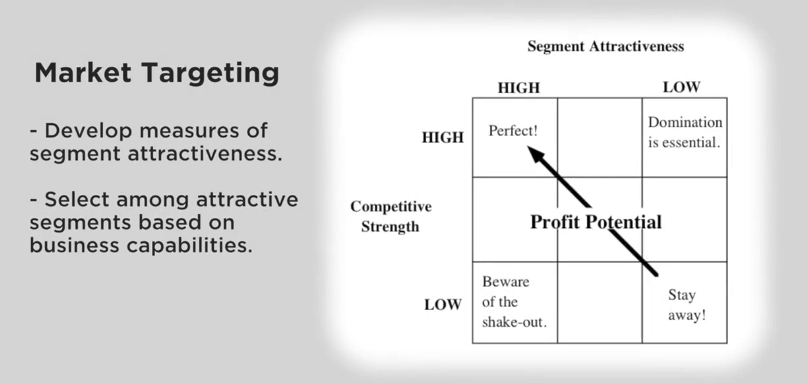
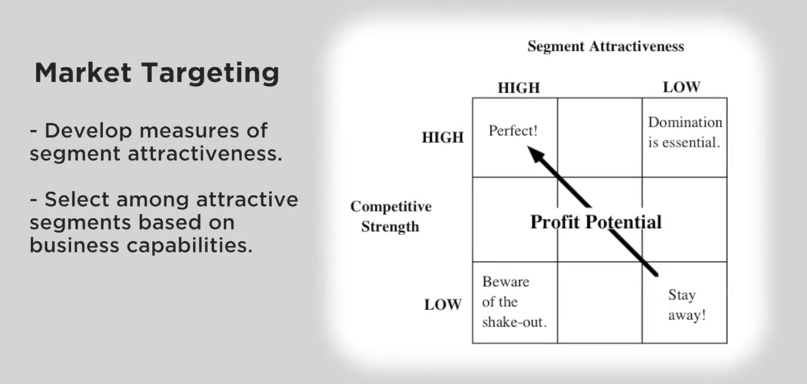
Targeting: After segmentation, the attractiveness of each segment is evaluated, and a specific segment is chosen to target. Then constantly monitor if the actual buyers match the target segment. Segment selection criteria:
- Segment size, growth, and stability
- Value of the segment
- How easy for the company is to address the segment's needs
- Number and strength of competitors
-
-
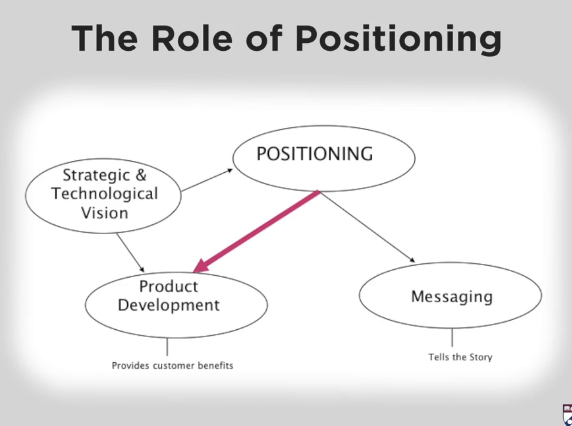
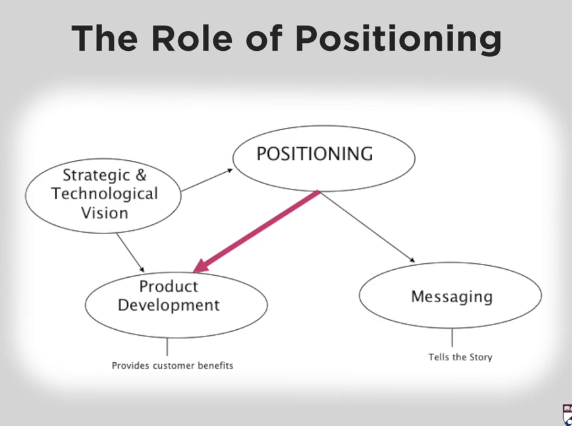
Positioning: Once a target segment is selected, the brand and product are positioned to meet the needs of that segment, using a distinct marketing mix (product, place, promotion, price).
This defines how a product meets the needs of a target segment. A strong positioning statement includes:
- Target Segment: The specific group of customers the brand aims to serve.
- Point of Difference: What makes the brand unique compared to competitors.
- Frame of Reference: The context in which the brand is compared to others.
- Positioning is implemented through all elements of the marketing mix: product, price, promotion, place.
- Positioning must be defensible. Other people should not be able to copy it easily.
- Positioning requires to make choices. You must choose a point of difference and a frame of reference.
-
Point of Parity means the basic features or qualities that a brand shares with its competitors, which are needed for it to be seen as part of a certain category. Here are the main points:
-
What It Is: Points of parity are the must-have qualities that a brand needs to be recognized in its category.
-
Why It Matters: These features are important for customers to see the brand as a valid choice. For example, a grocery store needs to have fresh fruits and vegetables to be considered a grocery store.
- Competing with Others: Points of parity can also help a brand compete against others. If one toothpaste brand starts using fluoride, other brands might also add fluoride to keep up.
Point of Difference is about the unique features or qualities that distinguish a brand from its competitors. Here’s how it can be summarized in the presenter's words:
-
Definition: The point of difference is what makes your brand stand out. It’s the unique attribute or benefit that sets you apart from others in the market.
-
Importance: This uniqueness is crucial because it helps customers understand why they should choose your brand over another. For instance, if your product offers a feature that no one else does, that’s your point of difference.
- Customer Preference: A strong point of difference can create a preference among customers, making them more likely to choose your brand. It’s what makes your brand memorable and appealing in a crowded marketplace.
No comments to display
No comments to display